Prepare for University Applications: The Checklist

Thando Mzimela-Ntuli
Co-Founder
Apr 16, 2025
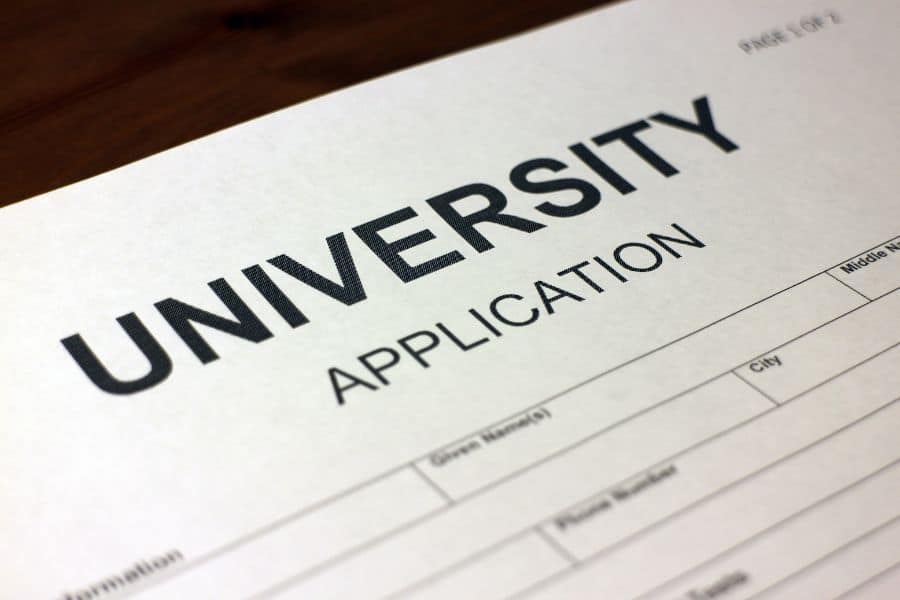
Most students only discover what they need once they are already inside an application form. Then they have to stop, go find documents, come back, and start again — or worse, they submit an incomplete application without realising it.
This article tells you everything to have in place before you begin. Prepare once. Then apply everywhere.
What you need to know before you gather anything
There is no central application system in South Africa. Unlike some countries that use a single platform for all universities, here you apply to each institution separately, through their own portal, with their own form and their own document requirements.
This means the preparation work you do once — gathering documents, calculating your APS, knowing your subject results — saves you time across every application you submit.
Part 1: Your personal documents
Every university will ask for these. Get certified copies ready before you start.
South African ID document. A certified copy. If you do not yet have your green ID card or smart card, a certified copy of your birth certificate may be accepted in some cases — but confirm this with each institution. Do not use an uncertified photocopy.
Passport-sized photo. Some institutions still ask for this. Have a few digital copies saved.
What "certified" means: a certified copy is a photocopy that has been stamped and signed by an authorised person — a police officer, a commissioner of oaths, a post office official, or a lawyer — confirming it is a true copy of the original. Certifications are typically valid for three months. Get them done close to application season, not six months before.
Part 2: Your academic results
If you are currently in Grade 12: Most universities will accept your latest school report — typically your Grade 11 final results or your mid-year Grade 12 report — to make a provisional offer. You will submit your final Matric results once they are released.
If you have already completed Matric: You need a certified copy of your National Senior Certificate (NSC) and your statement of results. These are two different documents. The statement of results shows your subject percentages in detail. The NSC certificate shows your overall qualification. Some universities require both.
Have both documents certified and in digital format (PDF) before you begin applying.
Part 3: What you need to know, not just have
Some of this you will type into a form. Some you will need for decisions before you get there.
Your APS score. Calculate it before you apply. Know your number. Refer back to Article 2 if you need to work through this.
Your subject list and percentages. Know exactly which subjects you took and what you scored. Some forms ask for this line by line. Some programme requirements depend on specific subjects — not just your overall score.
Your programme choices. Know the full official name of the qualification and the faculty it falls under. "Business" is not specific enough. "Bachelor of Commerce in Accounting, Faculty of Commerce, Law and Management" is what the form will ask for.
Your NBT results (if applicable). Know whether the programmes you are applying to require them and whether you have written. If you have, have your registration number and results reference ready. If you have not, check Article 3 before you proceed.
Your email address and phone number. Universities communicate with applicants almost entirely by email and SMS. Use an address you check regularly. Do not use a parent's email address — correspondence about your application needs to come to you.
Part 4: Programme-specific extras
Beyond the standard documents, certain programmes ask for additional materials. Find out early — these take time to prepare and cannot be rushed.
Motivation letter or personal statement. Some faculties — particularly Education, Social Work, Law, and some Health Sciences programmes — ask you to explain why you want to study the programme and what you intend to do with it. A good motivation letter is specific and honest. A vague one does not help your application.
Portfolio. Required for Architecture, Fine Arts, Graphic Design, and related creative programmes. Requirements differ by institution — some want physical work, others accept digital submissions. Check the exact format well in advance.
CV or résumé. Some programmes or bursary applications attached to admission processes will ask for this. Keep a short, updated version ready.
Proof of payment. Application fees range from around R100 to R400 depending on the institution. Some universities offer free applications. Where a fee applies, you will typically need to upload proof of payment as part of the form. Keep the receipt.
Part 5: Financial aid — apply at the same time
If you will need financial support to study, do not wait until after you have been accepted to apply for funding.
NSFAS (the National Student Financial Aid Scheme) is the main source of government funding for students from low-income households. Applications for NSFAS open separately from university applications, usually around August to November for the following academic year. Missing the NSFAS window is a common and costly mistake.
Many universities also have their own bursaries and financial aid processes. These often have earlier deadlines and separate application forms. Check the financial aid section of each university's website when you begin your application — not after.
The pre-application checklist
Work through this before opening any application portal:
Documents ready
Certified copy of SA ID (certified within last 3 months)
Certified copy of NSC certificate and statement of results, or your latest school report if still in Grade 12
Digital passport photo saved as JPEG
Proof of payment method ready (for application fees)
Information confirmed
APS calculated
Subject list and percentages noted
Full official name of programme and faculty confirmed for each university
NBT results obtained or status confirmed
Active personal email address ready
Programme-specific materials
Motivation letter drafted (if required)
Portfolio prepared (if required)
CV updated (if required)
Funding
NSFAS application status checked or submitted
University bursary deadlines noted
One last thing
Each university's portal looks different and may ask for documents in different formats. PDFs are almost always accepted — if you are scanning documents, save them as PDF, not as photos. Blurry or rotated scans are a common reason documents get rejected.
Check your application status after submitting. Some portals send a confirmation number. Note it. Universities may come back to request additional documents, and you need to respond quickly.